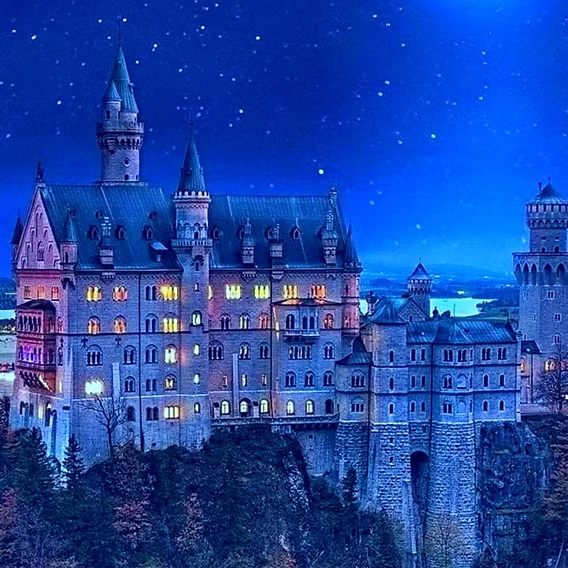
The most iconic photo location for Neuschwanstein — 90 meters above the Pöllat Gorge. Learn when the bridge is open, how to reach it without crowds, and the best alternative viewpoints.
⚠ Independent InformationExplore tickets and guided tours to Neuschwanstein Castle and Marienbrücke.
| Feature | Details |
|---|---|
| Height above Pöllat Gorge | Approx. 90 meters |
| Built | 1845 (original); rebuilt 1866 after flood damage |
| Walk from Castle | 10–15 min downhill, 15–20 min back (uphill) |
| Open Season | Typically May through October (check schwangau.de for exact dates) |
| Winter Closure | Usually Nov–April due to icing danger |
| Admission | Free |
| Best Photography Time | 4–5 PM summer; midday sun in winter |
| Capacity/Crowds | Narrow; empty mornings, overrun after 2 PM |
Practical Tip: Reach Marienbrücke before 10 AM — you'll get quiet moments without selfie sticks and tour groups. The light before noon isn't ideal for photos, but the solitude is priceless.
Marienbrücke was built in 1845, long before Ludwig II even broke ground on Neuschwanstein. It was originally a wooden bridge across the Pöllat Gorge — a functional structure for shepherds and foresters, not tourists.
After a flood damaged it in 1866, the bridge was rebuilt in its current form as an iron truss bridge. The name "Marienbrücke" comes from a nearby Mary chapel (long gone). King Ludwig himself reportedly used the bridge regularly to admire his castle from various angles — he was an obsessive photographer-in-waiting.
Today's wooden planking is a 1980s reconstruction. The bridge has been photographed over 100,000 times daily and ranks among Germany's top 10 most-photographed sights.
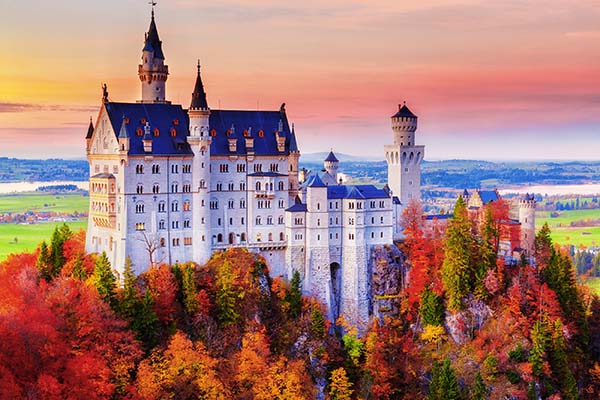
From the valley, Neuschwanstein looks tall and majestic. From Marienbrücke, you see the full drama: the main tower with two tall spires, the slender pointed turrets on the right, the forecourt with its battlements on the left. The bridge sits precisely on the axis where the castle's proportions align. This geometric perfection is no accident — Ludwig was an amateur architect-enthusiast who deliberately positioned himself on this spot.
Marienbrücke is not a park with regular business hours — it's a public footbridge over a wild gorge. The Schwangau municipality closes it in winter for two reasons:
In practice: Opening mid/late May, closure early November. Exact dates published by Schwangau municipality before season. April and December are gambles — the bridge might be open or closed.
In winter, view the castle from several points in the valley. The best option is Tegelberg — take the cable car up (approx. 8 €), then a 15-minute walk to a platform at similar elevation to Marienbrücke, minus the crowds.
Marienbrücke is not on the standard castle route. After visiting the castle, you must *descend* to the bridge — that's the key point.
Just past the castle exit, a wide level forest path begins (marked "Marienbrücke 1 km"). It winds through spruce and beech down to Pöllat Creek, where the bridge spans the gorge. Total: 10–15 minutes walking. Return uphill is more strenuous — budget 20 minutes.
Drivers or bus users with limited time can head directly to Marienbrücke — there's a parking area on Tegelbergstraße. Walk from there approx. 10 minutes. Many use this to shoot Marienbrücke photos without visiting the castle.
High summer (June–August), sunset is around 8 PM. One hour before sunset (approx. 7–7:30 PM), light hits the castle's west façade straight-on and warm. Towers glow creamy beige, shadows grow long and dramatic. This is the Hollywood hour.
April/May and Sept/Oct, best time is 4–5 PM — lower sun, softer light. Winter (if the bridge is open, rare), photograph 12–2 PM midday when snow reflects sunlight.
Many tourists shoot with the sun at their back. That yields flat, bright images. Try backlighting: Position yourself so the sun is between castle and camera (caution: never look directly into the sun!). This creates a dark silhouette with a glowing rim — very dramatic.
For an empty shot: Arrive before 9:30 AM or after 6 PM. Day visitors are gone by 5 PM, then the place is yours. Downside: The light isn't ideal. Best compromise: 2:30–3:30 PM weekdays — good light, noticeably fewer crowds than 4–5 PM.
About 15 minutes by car from Hohenschwangau. Take the cable car up (approx. 8 €), then a short walk to a platform at similar height to Marienbrücke. Big advantage: The castle is photographed from top-right, not head-on like from the bridge. Less touristy, fewer photographers. In summer, green meadows frame the castle naturally.
A hiking path through the gorge itself — starts in Hohenschwangau village, climbs between rock walls, emerges below Marienbrücke. Duration: approx. 45 minutes. Great for nature shots, but the castle is less prominent from below.
An obscure spot east of Hohenschwangau on the road toward Füssen. Offers a 3/4 profile of the castle — less classic than Marienbrücke, but crowd-free. Poorly signposted.
A trail showing the castle from multiple angles — 2–3 hours, challenging in places. Perfect for hikers who don't want to join the Marienbrücke photo crush.
Marienbrücke has solid wooden railings on both sides. Stable, but slippery when wet. The bridge is relatively narrow (approx. 4 meters) and crowded on sunny days. Watch your footing, not just your phone — 90 meters of air below you.
Small children should hold an adult's hand. The bridge isn't dangerous, but the psychological impact (gorge beneath your feet) can frighten. Children under 5 may panic.
Not wheelchair-accessible. The forest floor is uneven, the bridge a narrow wooden plank without special equipment. For mobility issues, Tegelberg cable car is better.
Get off the bridge immediately in a thunderstorm! It's the highest structure nearby and a potential lightning rod. Schwangau warns of storms.
Weekdays before 9:30 AM or after 6:30 PM. Weekends: nearly impossible. Compromise: Weekday 2:30–3:30 PM with better light but fewer crowds than 4–5 PM.
Walk from castle: ~10–15 min down, 15–20 min back. Photography time: 15–30 min. Budget at least an hour if you really want to shoot.
Marienbrücke is free and independent of castle tickets. You can visit the bridge even if you missed your castle slot.
Yes, on-leash. The forest path is dog-friendly. The bridge itself is tight — large dogs get anxious.
Usually yes, but the wood railing gets slippery. The bridge closes only in storms (winds over 50 km/h). Rain alone doesn't close it.
The forest path isn't stroller-friendly — too many roots and rocks. A baby carrier or hiking backpack works better.
The lot on Tegelbergstraße is paid (approx. 5–6 € per day). Alternative: Free parking in Hohenschwangau village, then 10 min walk uphill.
